Memes: How They Spread, Evolve, and Power Online Culture
A practical guide to memes for marketers, creators, and community managers seeking reach without cringe.
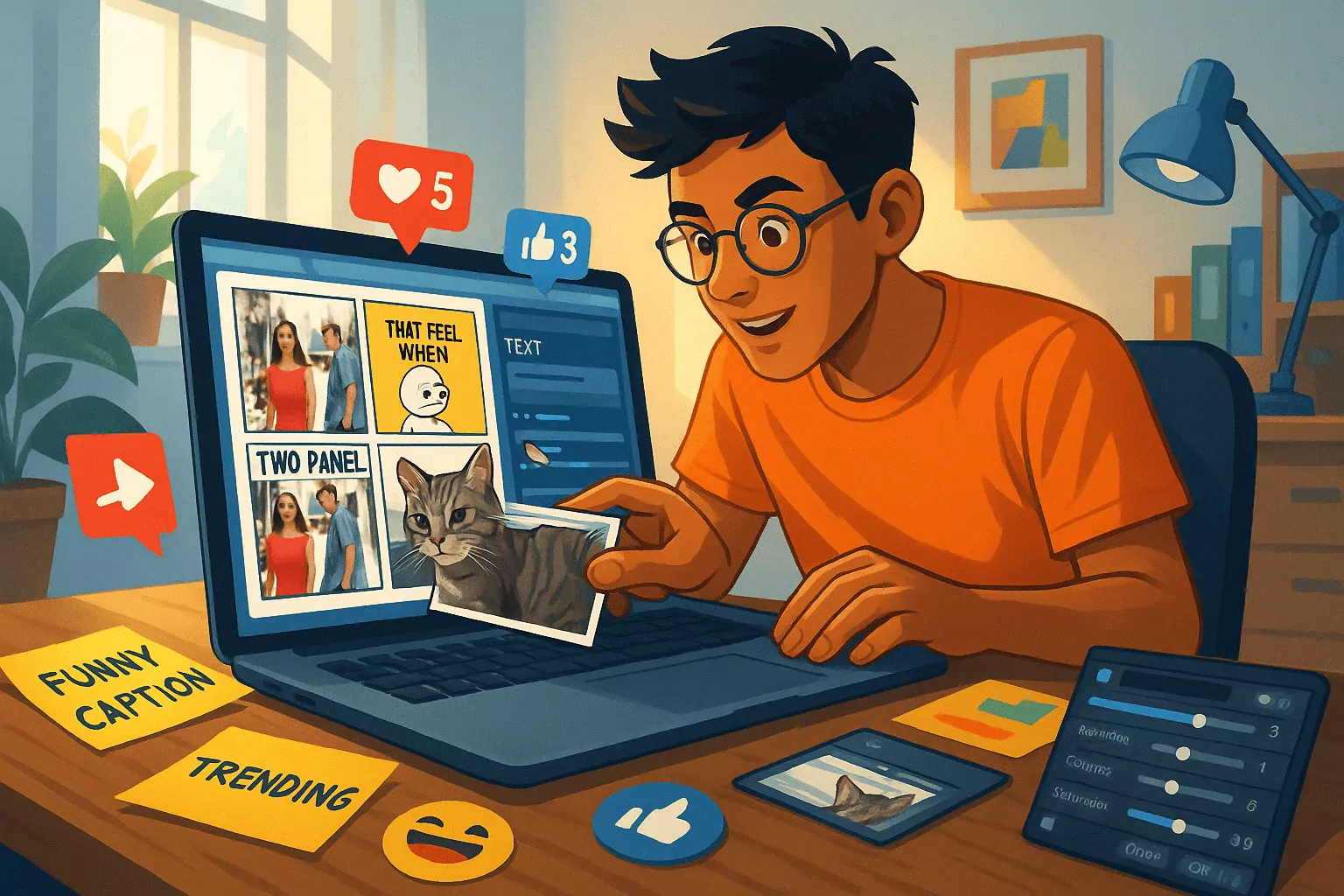
The Building Blocks Behind Shareable Memes
How Memes Travel: Formats and Meme Templates
Memes move fast because they compress complex ideas into simple, repeatable formats people instantly recognize. At their core, memes are frameworks plus context, which is why meme templates make participation effortless. A good template lowers cognitive load, so the audience spends energy on the joke, not decoding the setup. The most resilient formats leave room for remixing while keeping a stable visual or textual anchor. When you combine clarity, a familiar structure, and a current hook, memes find momentum with minimal friction.
Creators gravitate to meme templates because they preserve the punchline while inviting personalization. The template aligns expectations, the caption adds specificity, and the pairing multiplies reach across social media trends. This repeatable structure is also why brands can join without inventing a new language each time. By selecting a format that fits your voice, you can stay timely without sacrificing brand safety. Treat templates as tools, not crutches, and your memes will feel fresh rather than derivative.
Timing, Social Media Trends, and the Viral Content Flywheel
Great ideas miss if timing is off, because social media trends shape what the audience expects today, not yesterday. Watch the moment, then align your post with audience mood, platform tempo, and cultural context. Early movers earn outsized visibility as algorithms reward fresh discourse and rising engagement. When your take lands, it feeds a viral content flywheel: saves and shares spark comments, which trigger more impressions. Small speed gains-like prebuilt assets and approval paths-often decide whether your memes ride the wave.
Calibrate cadence to platform rhythms and your community's attention cycles. On fast feeds, speed beats perfection; on slower networks, depth and relevance carry more weight. Track trigger events such as product drops, sports finishes, or industry news that can anchor timely memes. Pair a current spark with a fitting template to reduce production time and keep quality high. Repeat this loop to compound reach as your audience starts anticipating your perspective on social media trends.
Why Memes Resonate in Internet Culture
Memes thrive because they speak the native language of internet culture: fast, referential, and participatory. They compress shared experiences into punchy shorthand that strengthens in-group bonds. Humor disarms complexity, letting sensitive or technical ideas feel approachable. Visual anchors make recall effortless, so one successful post can seed a dozen riffs overnight. This loop of recognition and reinvention keeps memes sticky long after the initial spark fades.
Resonance grows when audience identity is acknowledged and reflected back with respect. Memes that punch up rather than down align with community values and avoid backlash. Context matters, because what reads as playful in one niche can sour in another. Build cultural fluency by spending time in the spaces you hope to reach, not just observing from afar. When your voice matches the room, your memes contribute to internet culture rather than exploiting it.
Creating Memes Without Cringe
Brand-Safe Memes: Tone, Boundaries, and Ethics
Brand-safe memes start with a defined tone guardrail that sets what you will and will not joke about. Clarity prevents last-minute debates that cause missed moments or risky posts. Sensitive topics, tragic events, and individual misfortune should be off-limits for professional accounts. Build an escalation path for edge cases so teams can move quickly without guesswork. With boundaries in place, creativity flows because contributors know the safe sandbox.
Ethics matter because trust compounds slower than reach but breaks faster than jokes land. If your take relies on misinformation, stolen assets, or punching down, the short-term gain will cost long-term credibility. Use licensed or original visuals, and verify claims before publishing. When borrowing a format, credit the source if the lineage is clear and public. Memes can be fun, but your audience will remember how you behaved more than how you trended.
Fast Production: From Idea to Post Using Meme Templates
Speed is a competitive edge, and a library of meme templates turns ideas into posts in minutes. Organize files by format, topic, and use case so anyone can find a starting point fast. Preload brand-safe type, spacing, and colors to reduce micro-decisions. Keep caption frameworks that guide voice while leaving room for situational wit. When the moment hits, your team can focus on the angle, not the assembly.
Build a lightweight pipeline that balances quality and pace without introducing friction. A shared brief should capture context, intended reaction, and potential risks. Draft two or three variations and pick the strongest fit for the platform at hand. Schedule or post immediately depending on the shelf life of the trend. Over time, this repeatable system sharpens instincts and keeps memes feeling effortless.
Testing Fit Across Social Media Trends
Not every trend suits every account, and restraint is part of the craft. Evaluate whether the joke aligns with your audience's interests and your positioning. If the leap from topic to brand is strained, skip it and wait for a better opening. Test tone on a lower-stakes channel before rolling out widely. If engagement is confused rather than delighted, consider that a protective signal.
Run small experiments to learn where your style lands strongest. Vary the same meme across platforms to see how community norms shift interpretation. Compare results against historical baselines instead of chasing absolute numbers. Track saves, shares, and comment quality to gauge cultural fit, not just clicks. Over time, your playbook will map which social media trends call for quick riffs and which deserve depth.
Memes as a Marketing Advantage
Meme Marketing That Drives Real Outcomes
Meme marketing works when it supports clear objectives instead of chasing vanity metrics. Tie posts to goals such as awareness, community growth, or product education. Use memes to open doors emotionally, then offer a path to deeper value. A pinned resource, comment reply, or follow-up thread can convert curiosity into action. When your memes prime attention, your next message lands with less resistance.
Position memes as a recurring format inside a broader content mix. Blend them with explainers, testimonials, and product updates so the feed has range. This balance protects credibility while keeping your brand culturally fluent. Track the downstream effects like search lift or newsletter sign-ups, not only surface reactions. Over quarters, consistent meme marketing compounds audience familiarity and goodwill.
Distribution Playbook for Viral Content
Distribution turns a good joke into reach, and small steps make big differences. Post when your core followers are active to seed early momentum. Encourage replies with a prompt that invites playful participation. Share to relevant communities where the reference will be instantly understood. When something pops, stagger reposts across platforms to extend the arc of your viral content.
Partners and creators can amplify your angle without diluting voice. Offer pre-cut assets and alt-text to reduce friction for collaborators. Keep a short list of friendly accounts that appreciate timely exchanges. Credit sources transparently, which often earns reciprocal boosts inside internet culture. Treat momentum as a resource that can be directed, not a lightning bolt you simply chase.
Measuring Impact: Beyond Likes to Lift
Surface metrics help, but strategic decisions need deeper signals. Track assisted outcomes such as branded search, session duration, and return visits after high-performing memes. Analyze comment quality to separate shallow attention from meaningful resonance. Look for halo effects like creator mentions or forum references that signal cultural stickiness. Correlate peaks in viral content with downstream conversions to understand true value.
Build a compact dashboard that blends quantitative and qualitative inputs. Include watchlists for social media trends to contextualize why a post spiked. Tag posts by template and topic to learn which meme templates consistently drive outcomes. Segment results by audience cohort to see who is actually moving through the funnel. With this view, meme marketing becomes a repeatable growth lever, not a guessing game.
Frequently Asked Questions
Are memes right for every brand?
Memes can work for most brands, but fit depends on audience expectations and category norms. If humor already has a place in your voice, memes extend that language naturally. Highly regulated or sensitive sectors can still participate with careful framing and clear guardrails. Start with low-stakes topics and observe how your community responds before committing. When alignment is weak, contribute in other ways while staying aware of internet culture. You do not need to post every day to benefit from cultural fluency. Aim for selective participation that adds value, not noise.
How often should we post memes without burning out the feed?
Cadence should mirror your audience's appetite and the pace of relevant social media trends. Many accounts succeed with one to three meme posts per week mixed among other formats. Use performance and sentiment to throttle up after wins and slow down after misses. If jokes start crowding out substance, rebalance before fatigue sets in. Keep a backlog of evergreen angles so you are not forcing weak takes just to stay active. Rotation keeps your memes feeling intentional rather than obligatory. Over time, consistency beats bursts for sustainable engagement.
What legal issues apply to memes and meme templates?
Legal risk centers on copyright, trademarks, and rights of publicity. Avoid lifting unlicensed photos, videos, or logos in ways that imply endorsement. When using recognizable faces, respect privacy and publicity rights unless usage is clearly permitted. Create your own visuals or license assets, and treat meme templates as inspiration rather than direct copies when ownership is unclear. Parody and fair use can apply, but they are narrow and context-specific. Keep a short review path for edge cases so speed does not override compliance. Clear provenance protects your reputation as much as it protects your posts.