Memes Explained: How Viral Jokes Rule the Internet
A practical guide to memes for marketers, creators, and community managers seeking shareable, on-brand humor.
What Memes Are and Why They Spread
Memes as Social Language
Memes are the internet's shorthand for shared ideas, emotions, and in-jokes across communities. They compress context into a small visual or textual package that travels fast. Because memes are easy to grasp, they bridge gaps in culture, age, and location. They sit at the heart of internet humor, rewarding people who understand the reference and inviting remixers to add their spin. When memes get timely and relatable, they evolve into viral memes that sprint through timelines.
Think of memes as cultural call-and-response, where the audience completes or twists the punchline. The more a format invites participation, the faster the conversation multiplies. Familiar structures reduce friction, so reaction images and recognizable captions lower the effort to join in. Shared formats also make credit and parody clearer, which helps communities police tone and context. The result is a living language that adapts to social media trends in real time.
The Lifecycle of Viral Memes
Most viral memes begin with a spark, often a striking image, a short clip, or a snappy line. Early adopters test variations, setting the initial joke structure and boundaries. Mid-stage growth happens when mainstream accounts and group chats amplify the format. Saturation hits once brands, public figures, and casual users repeat the same beats. Decline sets in when novelty fades, though niche remixes can revive internet humor later.
Timing matters at every phase, and speed favors creators who watch social media trends closely. When a format is peaking, originality and precision beat volume. Small twists that respect the core setup keep the joke coherent and shareable. Over-explaining kills momentum, while crisp captions let audiences connect dots themselves. Sustainable participation also means knowing when to retire a template before fatigue erodes goodwill.
Formats: From Reaction Images to Meme Templates
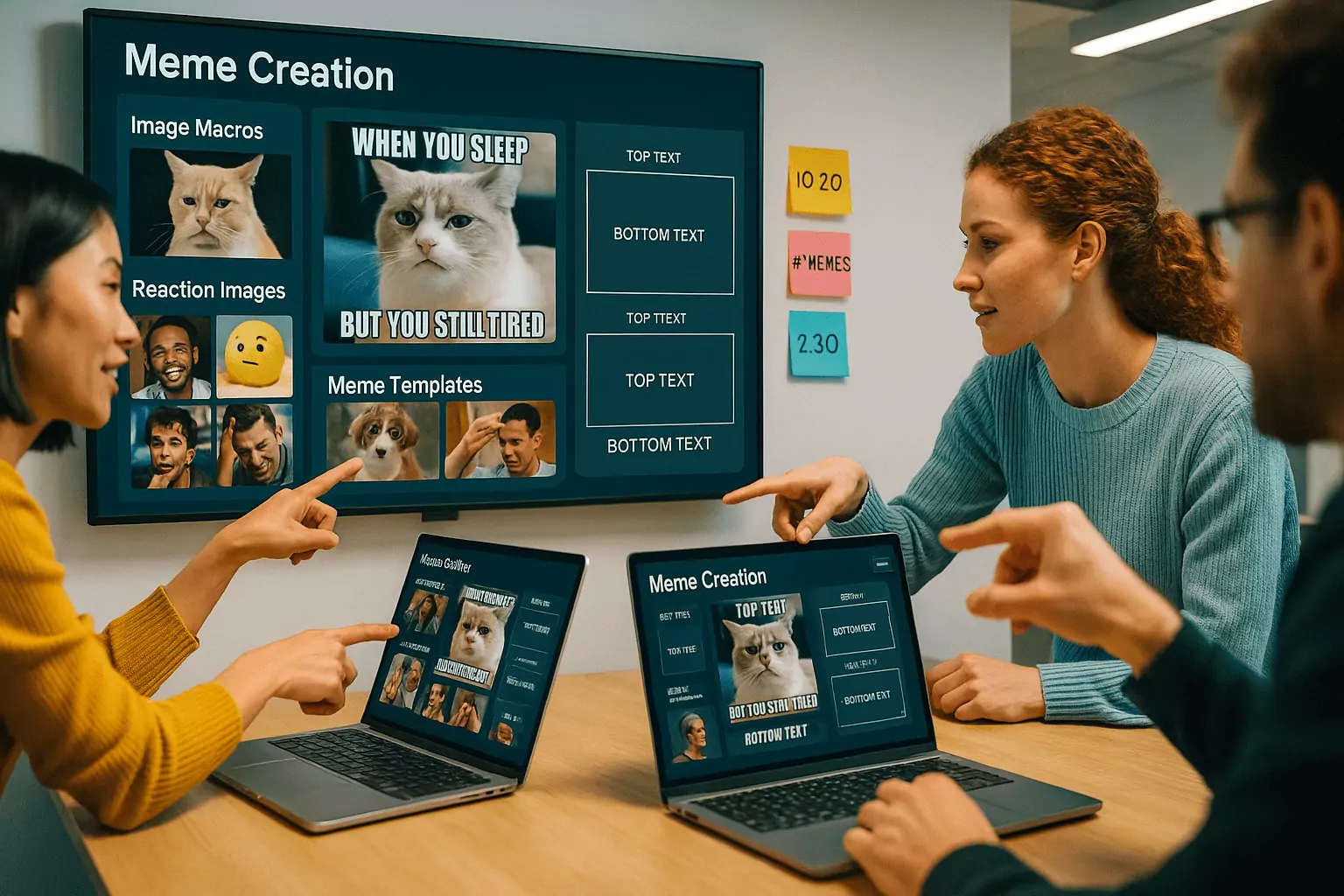
Most memes cluster into formats people can recognize at a glance. Image macros pair bold text with an expressive photo for clarity and punch. Reaction images convey a mood instantly, letting captions supply situational context. Meme templates act as blueprints, encouraging many riffs while preserving structure. Video loops, stitched clips, and captioned screenshots expand what viral memes can do across platforms.
Each format has strengths, limitations, and best-use cases to consider. Reaction images excel at quick replies, while meme templates are ideal for repeatable series. Video gains algorithmic lift on many platforms but demands more editing discipline. Text-only copypasta spreads fast in comment threads yet needs careful tone control. Choose the format that fits your message, your audience, and current internet humor norms.
Creating Memes That People Want to Share
Audience Insights and Social Media Trends
Great memes start with clear audience understanding, not just a clever punchline. Map the references your community gets and the ones they find tired or cringey. Track social media trends to see where your voice fits naturally. Catalog recurring moments where your audience celebrates wins, vents, or laughs at shared pain. Aligning with those beats boosts the odds of turning posts into viral memes.
Listening tools help, but direct immersion works best. Spend time in comment sections, group chats, and creator threads to feel the rhythm. Note seasonal triggers, recurring formats, and platform-specific etiquettes that shape internet humor. Distill insights into short creative briefs that clarify joke, format, and risk level. With that clarity, you can ride social media trends without forcing the vibe.
Writing Copy That Lands the Joke
Strong meme copy is specific, concise, and rhythmically precise. Set up the scenario in as few words as possible, then deliver a clean turn. Use line breaks and casing to control emphasis without clutter. Avoid explaining the joke, because internet humor rewards readers who connect dots. Read captions aloud to check pace, clarity, and the snap of the final beat.
Write variations and compare them side by side before posting. Swap synonyms to tighten cadence and reduce syllables where punch matters. Replace vague adjectives with concrete details your audience recognizes. When tone is sensitive, test with a small group before scaling. Polished writing lifts even simple meme templates above the feed's noise.
Designing Memes: Templates, Type, and Timing
Design supports the joke, so pick meme templates that match your message. Use readable fonts, high contrast, and safe margins to prevent crop issues. Keep branding light, because heavy marks can break immersion and shares. Ensure images are sharp and ethically sourced, especially for reaction images. Export sizes per platform to avoid auto-cropping that ruins the punchline.
Build a small library of approved meme templates for recurring themes. Standardize type styles and caption placements to speed production. Keep a lightweight style guide that balances consistency with spontaneity. Ship fast when a moment pops, but hold quality lines on legibility and tone. When timing is right, even modest visuals can become viral memes.
Distribution, Attribution, and Ethics
Posting Memes Across Platforms Without Losing Context
Each platform interprets the same meme differently due to pace and culture. Short captions and reaction images travel well on fast feeds. Longer jokes, multi-panel meme templates, and in-jokes fit better where audiences linger. Add just enough context to reduce confusion without spoiling the gag. Save threads or carousels for jokes that need sequencing and buildup.
Respect the visual grammar of the platform you're using. Adjust aspect ratios and caption length to match reader behavior. Avoid auto-crossposting that ignores format and timing differences. When in doubt, post natively and tailor the setup line per channel. Calibration preserves clarity and keeps internet humor feeling effortless.
Credit, Fair Use, and Brand Safety
Credit original creators when you adapt or repost formats, and ask permission when assets are not clearly reusable. Avoid identifiable private individuals and sensitive footage that could cause harm. Understand that "fair use" is context-dependent and risky for brands. Build from cleared assets, public domain materials, or your own staged photography. When a meme touches a sensitive topic, skip it rather than gamble reputation.
Publish an internal checklist for tone, claims, and audience risk. Include escalation steps for reviews when stakes are high. Archive sources, drafts, and approvals in one place for accountability. If something misses, respond clearly, remove it promptly, and share learnings. Brand safety keeps the door open for future viral memes done right.
Measuring Performance Beyond Likes
Surface metrics only tell part of the story of how memes perform. Track saves, shares, and replies to gauge resonance and community pull. Watch sentiment in comments to separate applause from polite likes. Map contribution rates when audiences start posting their own variations. These signals reveal whether a format is climbing or fading across social media trends.
Pair quantitative data with qualitative review sessions. Note which setups travel cross-platform and which stall outside niche circles. Compare outcomes by format, from reaction images to multi-panel meme templates. Use these insights to refine copy, visuals, and posting cadence. Consistent learning compounds reach and sharpens future internet humor.
Memes for Brands and Communities
On-Brand Memes That Feel Native
Start with a clear purpose, then pick formats that serve it without forcing the joke. Tone-map which brand values pair well with humor and which do not. Keep logos subtle and place them where they won't disrupt reading flow. Build recurring bits using meme templates to anchor a recognizable series. Consistency helps audiences anticipate your style while staying inside platform norms.
Use your product or service as a backdrop, not the punchline itself. Focus on relatable moments customers already experience. Let fans co-create, then highlight the best riffs with credit. Treat wins as community momentum rather than one-off spikes. This approach turns occasional hits into sustainable viral memes over time.
Community-Building with Memes and Reaction Images
Memes are social glue when they validate shared experiences. Reaction images let people respond quickly and keep threads lively. Prompt conversations with light challenges, fill-in-the-blank captions, or duet-friendly setups. Celebrate community riffs to reward participation and show you're listening. Over time, these rituals strengthen belonging more than any single post.
Host periodic theme weeks anchored by approved meme templates. Offer starter packs so fans remix within safe visual boundaries. Spotlight creators who set the bar for quality and tone. Track community language so your captions mirror how people actually speak. Done well, this cycle fuels authentic internet humor that compounds trust.
Avoiding Pitfalls in Fast-Moving Social Media Trends
Speed is tempting, but alignment beats urgency when stakes are high. Skip topics tied to crises, identities, or private individuals. Watch for meme fatigue signals, especially when social media trends turn cynical. If your team debates intent or impact, treat it as a no-go. Protecting the audience's dignity is the non-negotiable rule.
Maintain a red-team review for risky formats before publishing. Document scenarios that always require leadership approval. Keep apology and rollback playbooks ready for rare misses. Train new staff on cultural context, reference origins, and known sensitive zones. With discipline, you can chase viral memes without sacrificing values.
Frequently Asked Questions
What makes memes go viral?
Virality combines timing, relatability, and a format that invites remixing. People share when a meme captures a widely felt moment in a crisp, skimmable way. The best viral memes offer low-effort participation, so anyone can add a twist. Distribution also matters, from group chats to creators who amplify the joke. Platform fit boosts reach when aspect ratios, captions, and pace align. Finally, freshness and restraint keep audiences engaged without burning out the bit.
How can brands use memes without backlash?
Start with audience fit and avoid topics that punch down or exploit pain. Keep brand marks subtle so the joke feels native to the feed. Credit creators, clear assets, and respect community norms around attribution. Test tone with small segments before scaling to paid or cross-platform pushes. If feedback flags issues, pause, address concerns, and adapt future work. Treat trust as the goal, and let internet humor serve that long game.
Where can I find high-quality meme templates?
Build a library from your own shoots, cleared stock, and public domain assets. Save clean versions of popular meme templates with safe margins and readable caption zones. Track emerging formats by following curators and creators who spot early patterns. Catalog examples of reaction images that fit your tone and audience. Keep files sized for each platform to speed production. Organized assets help you move quickly when social media trends spike.