Key Factors That Make Memes Successful and Shareable
A practical guide for creators and brands on the factors that make memes successful across fast-moving social platforms.
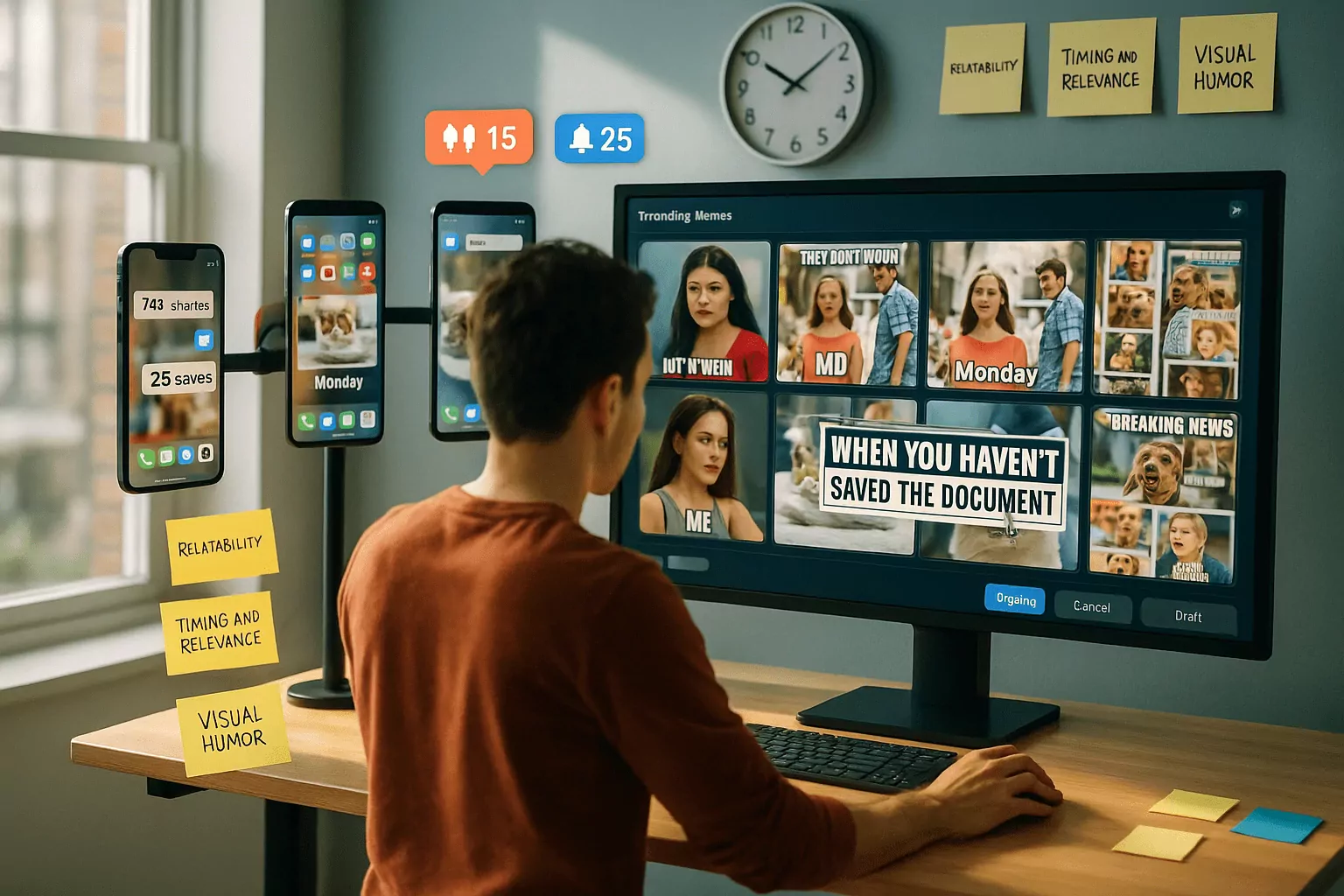
Context, Timing, and Cultural Relevance
Relatability: The Everyday Hook
Understanding the factors that make memes successful starts with relatability, the instant sense that "this is me." People share what reflects their daily wins, losses, and tiny frustrations because it feels personal. When a meme mirrors a common experience, it lowers effort to get the joke and boosts shareability. This alignment with real life also frees the audience to add their own twist without breaking the premise. In fast feeds, relatability is a shortcut to attention and the first domino in meme virality.
Design your concept around a universal moment, then add a specific detail that nails the mood. The detail acts like a wink, deepening relatability while keeping timing and relevance intact. Avoid niche jargon unless your goal is a tight in-group; broader language invites more remixes and shares. Test phrasing with a few readers to ensure the core read lands in under two seconds. When the core truth is unmistakable, shareability follows naturally.
Timing and Relevance Drive Meme Virality
Timing and relevance determine whether a clever idea becomes yesterday's news or today's feed staple. Memes thrive when they ride a live moment, from a sports upset to a product launch or a viral quote. Post while the audience is still forming opinions so your take can guide the narrative. Early iterations don't have to be perfect; speed beats polish when meme virality is at stake. If you miss the window, reposition the meme as a seasonal or evergreen angle rather than forcing it.
Relevance also means knowing cultural boundaries and reading the room. A meme that ignores context can feel tone-deaf and kill shareability. Watch comment threads to sense when the mood shifts from playful to sensitive, then adjust or pause. Tie your meme to a timely search term or trending phrase to boost discoverability without keyword stuffing. Aligning with timing and relevance is a repeatable edge, not a lucky break.
Shared Language and InâGroup Signals
Memes often speak in shorthand, and those cues create community as well as clarity. A familiar template or recurring line tells viewers how to read the joke before they finish it. These signals speed comprehension, which is critical to shareability and meme virality in crowded feeds. The trick is balancing accessibility with enough insider flavor to feel special. When in doubt, add a small explainer line in the caption without cluttering the image.
In-group markers should never punch down or hinge on exclusion that alienates new viewers. Aim for signaling that rewards attention rather than gatekeeping. If your audience spans multiple subcultures, create variant captions to preserve relatability. Track which phrasing earns the most saves and remixes, not just likes. Those signals point to the social glue that fuels long-tail sharing.
Format, Visuals, and Message Clarity
Design factors that make memes successful
Format is a decisive set of design factors that make memes successful, from aspect ratio to font choice and text size. Mobile-first layouts win because most viewing happens on small screens at arm's length. Keep the focal point large, edges clean, and text high-contrast for instant legibility. Visual humor works best when faces, gestures, or juxtaposed elements carry the joke without long copy. When the eye knows where to look, comprehension accelerates and shareability climbs.
Use consistent typography and spacing to telegraph structure across a series. That consistency makes your posts recognizable in grid views and fosters habitual engagement. Visual humor should survive muted autoplay and low brightness, so test against those conditions. Prepare square and vertical versions to fit platform norms without cropping punchlines. Small adjustments here often deliver outsized gains in meme virality.
Template Literacy and Remixability
Templates are creative guardrails that keep the joke structure stable while inviting new content. When a template is easy to remix, it lowers friction for participation and multiplies reach. Add clear zones for text or images so contributors know exactly where to swap elements. Publish a blank template in comments or stories to invite community riffs and boost shareability. The more intuitive the swap, the faster meme virality compounds.
Remixability also depends on using assets that are simple to edit on phones. Avoid thin outlines, tiny text, and intricate backgrounds that break when resized. Provide alternative colorways for dark mode to preserve legibility and visual humor. If you're a brand, offer logo-free versions so the community feels permission to play. Participation is a core engine of timing and relevance because it keeps the format circulating.
Visual Humor and Readable Design
Visual humor lands when contrast is visible at a glance: big vs. small, serious vs. absurd, calm vs. chaos. Cropping, zoom, and placement create micro-dramas that pull the viewer into the joke path. Keep captions short so images carry the tone; too much text dilutes relatability. Use repetition or pattern breaks to heighten surprise without confusing the eye. Strong composition translates directly into shareability across different platforms and devices.
Readable design means respecting how people actually scroll. Front-load the premise in the top half, then deliver payoff just below the fold. If motion is involved, hit the punchline in the first two seconds to catch skim-watchers. Test alt text and filenames with descriptive phrases to aid search while keeping the meme clean. These small practices help timing and relevance sync with algorithmic discovery.
Platform Dynamics and Share Triggers
Platform factors that make memes successful
Each network imposes platform factors that make memes successful, from aspect ratios to audience mood and posting cadence. Instagram favors crisp visuals and rapid comprehension, while X rewards topical wit and speed. Reddit thrives on context-rich captions and community norms that shape shareability. Tailor your package to the native behavior of the feed you're targeting. When the format fits the environment, meme virality becomes much more likely.
Study how comments, saves, and shares are weighted across platforms. If saves matter more than likes in a channel, design content people will reference later. Lean into carousels for explanations and short clips for punchlines where appropriate. Post natively rather than linking out to preserve timing and relevance at peak hours. Fit the culture first, then optimize the creative.
Algorithm Awareness Without Chasing It
Algorithms surface content that produces fast, predictable engagement patterns. Instead of trying to game the system, build repeatable signals: strong first-frame hooks, short setups, and clean punchlines. Encourage early engagement with a prompt that invites quick responses or remixes. These behaviors feed the loop that underpins shareability without feeling forced. Keep your eye on audience delight rather than speculative hacks.
Measure how different first frames affect retention and taps to expand. Swap thumbnails and opening lines to see what best serves timing and relevance. If you post a series, standardize the first-frame structure so viewers recognize it instantly. Reduce outbound links that interrupt session time when your goal is meme virality. Sustainable growth comes from consistent viewer value delivered quickly.
Social Proof, Emotions, and Calls to Share
People share content that signals identity and earns social credit among peers. Lean into emotions that travel well: delight, relief, righteous frustration, or awe. A subtle call to share can legitimize passing the meme along, boosting shareability. Surface early comments or stitches as social proof to nudge fence-sitters. When users feel part of a wave, meme virality accelerates.
Pair emotion with a low-effort action, like tapping to save a template or tagging a friend. Use captions to suggest specific contexts where the meme fits, strengthening relatability. Keep calls-to-action conversational, not corporate, to preserve authenticity. Highlight the best remixes to reward participation and extend timing and relevance. Social proof is not a vanity metric; it's a distribution engine.
Iteration, Credit, and Risk Management
Testing Loops and Iteration Speed
Fast iteration is a competitive advantage when culture moves by the hour. Draft multiple variations, then publish the strongest two across different time slots. Track saves, shares, and completion rates to learn which angles heighten shareability. Retire formats that stall quickly and double down on those with steady growth. This disciplined loop keeps timing and relevance on your side.
Micro-tests also uncover structural issues, like text placement or color contrast. Swap backgrounds, adjust crop, or rewrite the punchline to sharpen visual humor. Keep a changelog so lessons compound rather than reset each week. When iteration is habitual, meme virality becomes less random and more repeatable. Speed plus learning beats one-off luck.
Attribution, Ethics, and Brand Safety
Credit is currency in creator communities, and honoring it builds goodwill. If you adapt someone's format, tag them and note the lineage in captions or comments. For brands, secure rights to assets and avoid memes that hinge on sensitive news. Ethical choices protect long-term shareability by maintaining trust and relatability. Shortcuts that ignore credit often backfire with public callouts.
Establish internal guardrails for topics and tone to prevent avoidable blowups. When a meme touches on identity or trauma, reconsider or reframe with care. Offer opt-outs if you feature user submissions and respect takedown requests. Transparent practices help preserve timing and relevance without sacrificing values. Trust is a growth lever, not a constraint.
Measuring What Matters
Not all metrics are equal when gauging the factors that make memes successful. Shares, saves, and remixes typically predict reach better than raw likes. Track completion rate for multi-panel posts to see where attention drops. Segment performance by platform to spot where your format-native choices paid off. Over time, these signals reveal a playbook for consistent shareability.
Pair quantitative data with qualitative reads from comments and stitches. Note which phrases or visuals people quote back, as those drive relatability. Correlate peaks with timing and relevance to plan future drops. Archive best-in-class examples with notes on why they worked for meme virality. Measurement should sharpen creativity, not box it in.
Frequently Asked Questions
What single trait most predicts whether a meme will spread?
Relatability is the strongest leading indicator because it reduces cognitive load and invites identification. When people feel seen, they share to signal identity to their circles. This social mirroring boosts shareability and often triggers early momentum. From there, timing and relevance determine whether the momentum compounds or stalls. If you pair a universal truth with a live moment, meme virality becomes much more likely. Keep the premise obvious and the punchline crisp to shorten the path to "send."
How can brands use memes without feeling forced or cringe?
Start with audience truths you already own and adapt formats that fit your tone. Avoid hijacking sensitive news cycles; instead, align with light, timely moments where your presence feels natural. Use visual humor that matches your brand's design system and keep logos subtle or absent in the frame. Offer remixable templates that invite participation rather than broadcasting ad-speak. Measure responses for signs of authentic relatability, like saves and organic remixes. When in doubt, credit creators, be transparent, and prioritize community delight over promotion.
Do longer caption explanations hurt a meme's performance?
Explanations inside the image usually slow comprehension, which hurts shareability. Keep the visual payload self-sufficient and shift any needed context to a short caption. On platforms like Reddit, a richer caption can help if it adds humor or backstory without diluting timing and relevance. Test a concise first line that frames the read, then let the image deliver the payoff. If completion rates dip, shorten or remove explanatory text. The goal is effortless uptake that supports meme virality.